How to Find Walking Labyrinths 

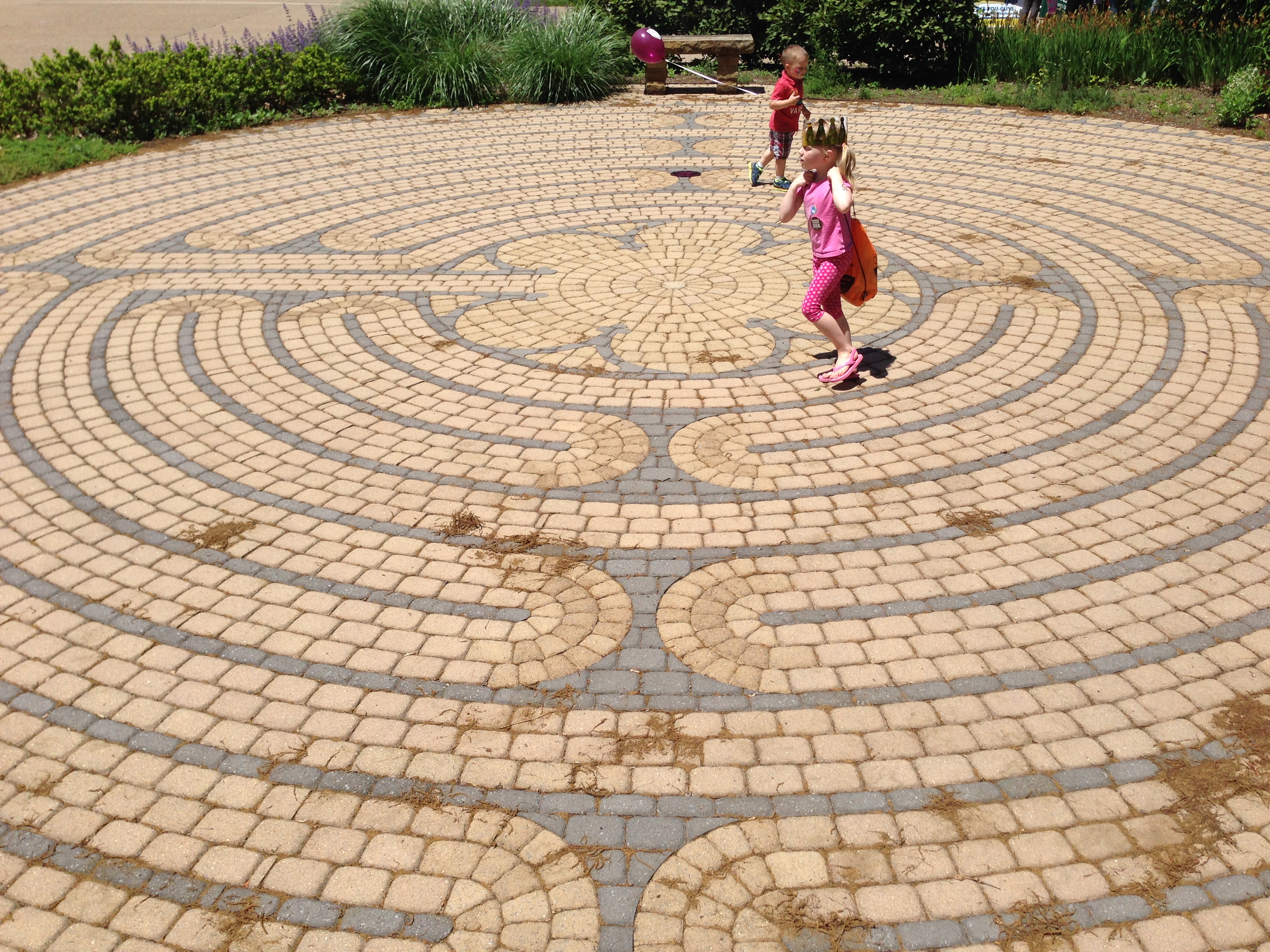
labyrinthMy family recently came across a walking labyrinth for the first time and now we’re hooked. We literally stumbled onto it during a college campus visit. Thinking that I would be the only one excited about this, I was surprised when both of my young kids jumped in and walked the entire length with complete focus.

Of course, I was quite impressed by this. It was a ten minute, non-digital oasis when I didn’t have to field questions about snacks or break up arguments. They were totally in the zone.
It is a simple, yet powerful, principal; you are set into forward motion, you have momentum, and knowing the end is not too far away, you’re committed to twisting, turning, and spiraling until you reach it. What a great exercise for focus in an age when people (of all ages) can use it the most! I left wanting more, so I’ve since tracked down several other nearby labryinths and we’re excited to visit them.

To find labyrinths near you, visit labyrinthlocator.com, where you can search a large database of labyrinths that includes useful information such as: directions, accessibility, hours, pictures, etc. You can search by city, zip code, or state. Both private and public labyrinths are listed, and while some aren’t open to the public, it’s still fascinating to view the pictures and marvel at these labors of love.

Sorting through data by state produced too many results over too wide of an area to sift through. Yet, I didn’t want to exclude any nearby small towns located in other zip codes that were still within reasonable driving range to me. A map of nearby labyrinths would be ideal, but since that wasn’t an available feature, my solution was utilizing zipmap.net to make a short list of a few zip codes within an acceptable driving range, then searching each of them on the labyrinth locator. I quickly found several labyrinths very close to me, and was especially surprised to find that I drive right past a few of them daily. Now that I know they are there and available to the public, it’s on my spring to-do list to hit as many as possible.

A day or so after our first labyrinth find, I noticed something interesting about a carpet at preschool. Carpet LabyrinthI think this may be an example of the Baader-Meinhof phenomenon at work. It’s amazing what you can notice, or miss, depending on how you look at things and whether or not your mind is primed.

If you visit any labyrinths near you, send a picture and I’ll post them here! Stay curious and keep exploring!
Make a Mischievous Leprechaun on a Shelf with Lucky Charms Cereal

LuckyForget Elf on a Shelf. Leprechauns are the original mischievous pranksters. Take Lucky—when he’s not cobbling shoes or hiding gold treasure, you can bet he’s out there playing tricks on unsuspecting citizens. One year, he turned most everything in our family room upside down. We knew it had to be him because the inside of our toilet bowls were suspiciously bright green!

Treasure

Marshmallow charms and other treasure.

While his presence can be annoying, it does have its advantages. You see, Lucky never hides his entire treasure at the end of a rainbow. He always reserves a few gold coins and some Lucky Charms to hide for the kids. I think he does this to mess with the Easter Bunny, but that’s just my theory.

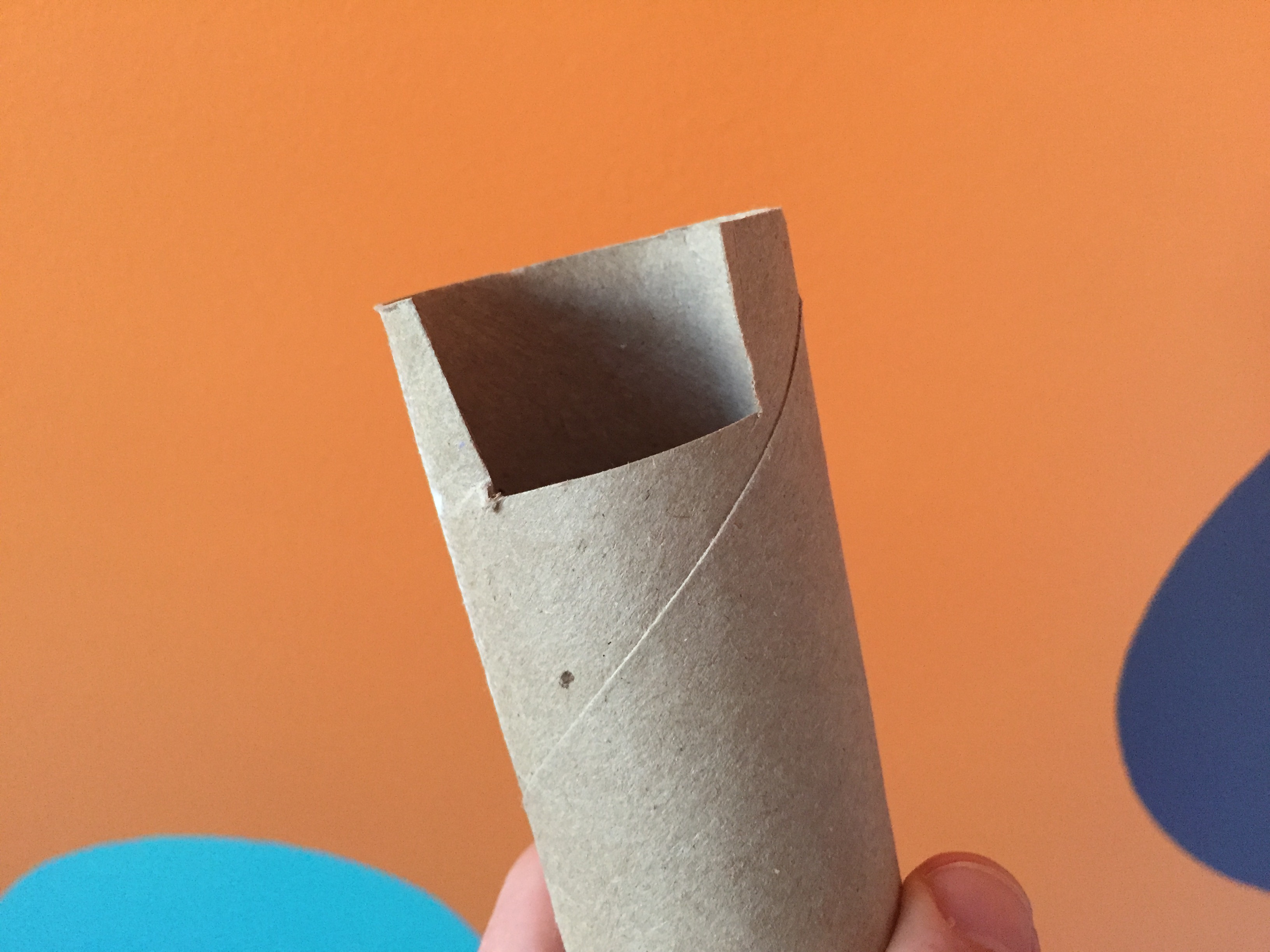
Lucky can stop by your house this year, too! Just grab some Lucky Charms and carefully cut him out of the box. I made a stand for mine by decorating a cardboard toilet paper tube and taping him to the inside edge.

Pick out some of the marshmallow charms (they’re magically delicious!) and make some little treasure bags to hide on St. Patrick’s Day before Lucky’s grand appearance. Sure, the kids will notice that he’s missing from the box long before then, but that will just add to the suspense.

Where did he go?

Where did he go?

For wee little ones, try leaving some rainbow streamers or a trail of clover confetti leading to your treasures to make them easier to find. Remember, you don’t have to make a daily commitment with this like you do Elf on a Shelf, though you certainly could if you’re into that. The investment is basically nil, especially if anyone in your family enjoys eating Lucky Charms! Lucky 2If Lucky visits your home, please send some photos my way so I can post them here!

Hear Me Say Words on the Cool Tools Podcast

The latest Cool Tools podcast has just been released, and I am extremely humbled and honored to be the featured guest. It was so exciting to speak about several of my favorite and most fun tools with hosts Kevin Kelly and Mark Frauenfelder. We discussed juggling balls, kite winders, a caricature drawing guide, and more!

The podcast is part of the fantastic Cool Tools web site, which features a uniquely wonderful tool each weekday. I love how the site focuses on user-generated reviews of tried and tested tools that people are passionate about.

In late 2013, Cool Tools: A Catalog of Possibilities, was announced. It’s a mammoth paperback companion book to Cool Tools, featuring 10 years of reviews featured on the site. Unable to ignore my enthusiasm about the upcoming book, my wife immediately pre-ordered it for me as a gift, and I’ve been happily perusing its giant pages ever since.

Cool Tools

You can download the latest Cool Tools podcast to your device via iTunes, or listen directly from the Cool Tools website.


Make a Wall Marble Run from Trash

Sometimes being trapped indoors can inspire some great bouts of creative play. Last Saturday was one of those days. The temperature was in the negatives, a storm that locals were already calling the wrath of Elsa was headed our way, and we weren’t about to go anywhere. I was in need of some indoor activities to occupy both the kids and myself, so I turned to the ever-growing stash of cardboard paper towel and toilet paper tubes that I’ve been saving. There never has been a real plan for this pile of trash, but I clung to the idea that eventually I’d think of something fun to do with them. A marble wall run turned out to be the perfect idea for a day of inside play. Marble Run

With a scant plan in place, we excitedly grabbed our cardboard tubes and painter’s tape and went to town securing tubes to the wall. The next time we try this, we’ll definitely start by sketching out a detailed plan on paper, but sometimes it’s just more fun to jump right in.

If you’re working with a combination of clumsy hands and walls that you’d rather not wreck, I suggest using FrogTape Delicate Surface. Its adhesion is not as great as other tape, but it won’t peel off your wall paint either. If you’re not too concerned with your wall’s well-being, then any painter’s tape should do the job.

In order to keep young minds interested, work backwards and be sure to do LOTS of testing each step of the way. We used a bell that came with a board game so we could hear a satisfying ding at the end of every successful run. If you don’t have a bell, try finding something else that makes a fun sound, like a toy xylophone or drum, or even a tin can. Bell
The rest of the build is pretty straight forward and limited only by your imagination, although you won’t get very far without having to do some problem-solving.
For instance, we had to figure out how exactly to get the marble to drop from one tube into the next, something we initially overlooked. Cutting them in half lengthwise, like a half-pipe, made for a simple drop from chute to chute, but we found the tubes were much harder to tape to the wall that way. Instead, we cut out small notches for the marbles to pass through. We also had to plug the end of a few tubes to stop speeding marbles from launching out the other side.Partial tube cut
You can go crazy with incorporating other light objects into the design. We thought about using some kitchen funnels but our marbles wouldn’t fit through the small holes, so we improvised with a plastic milk jug and styrofoam coffee cup. We ended up liking these recycled items way better.

At one point, while my son and I were playing, we noticed that my daughter had ditched us. I figured that she hit her limit and finally got bored with the project. I was wrong! As it turns out, she left to design her own marble run without any help!Marble Run I love the design she came up with, and how she sometimes has to jiggle one of the tubes when a marble gets stuck. A little more tweaking should solve that problem. This was a super fun project, and I think would appeal to all ages. I sure had fun! If you try it, please send some pictures our way!

DIY Juggling Clubs

DIY Juggling ClubsI recently wrote about my experience learning to juggle. I hope it has inspired someone out there to give it a try. Please let me know if you do! I still have a lot I’d like to learn juggling three and four balls, but I’ve also become curious about juggling clubs, which are bigger and flashier. While I’m at it, I also want to learn how to unicycle, but I’m afraid that my family may get fed up with too many circus shenanigans at once.

While juggling clubs are a natural progression, I’ve been reluctant to run out and buy a nice set of them  because I still have a ton to learn with juggling balls. Fortunately, I found some great online instructions to make your own DIY juggling clubs. They are made almost entirely from common household items such as empty soda bottles, duct tape, and tennis balls. I scrounged up the majority of materials at home, and only needed to buy some rivets and wooden dowels.Juggling Materials

They look like they’ll do a great job of giving me a feel for juggling clubs before committing to purchasing a professional set. Now I don’t have an excuse to avoid learning clubs any longer. Time to practice!

Getting Started with Juggling

JugglingI love exploring new hobbies and interests, and while there’s not nearly enough time in the day to keep up with all of them, one of the few that has stuck over the last few years is juggling. Not only is juggling extremely fun and a classic neat trick to have up your sleeve, it also comes with other powerful benefits. For one, it’s really good exercise, especially when I’m learning new tricks and dropping balls everywhere. It’s also really good for your mind in a variety of ways, and has been linked to increased grey matter in adult brains. I’m looking forward to teaching my kids what I’ve learned so they can gain the same benefits, and so we can eventually learn to do awesome passing tricks!

Learning to juggle three balls takes a quite a bit of patience and focus at the beginning, but that’s also what makes it so fun and rewarding as you start seeing results. It’s honestly not very difficult if you understand the basics and practice smart. This just means breaking it down to the smallest and simplest parts and mastering them before moving on and adding complexity. So, are you ready to give it a try?

Some great beginner tutorials can be found on YouTube. I like this channel from Expert Village, which teaches beginning techniques for three balls, but quickly advances into many other tricks. Be prepared to spend a lot of time on just the first few videos, and do not be in a rush to move on too fast.

Your initial goal should be mastering the very first exercise, then each succeeding step, in order to lay the foundation for which you will build all of your technique and skill. I can’t stress this point enough. I tried and failed at juggling several times when I was younger because I didn’t follow the basic rule of breaking it down to the simplest movement and mastering it before moving on. This idea is actually quite universal and can be applied to learning many other skills.

By doing the above, you’ll have mastered the three-ball cascade before you know it! Now, you can take this experience plus the added confidence boost and apply it towards your next project. On the other hand, if you’re enjoying your new hobby as much as I am, you can continue to delve deeper. Just like when you are learning to play a musical instrument, there is an infinite amount of new skills as well as “tricks” you can learn to take your ability to the next level.

If you’re like me and you just can’t wait to jump in to something, go ahead and watch a tutorial, grab a few makeshift juggling balls (small scarves, oranges, baseballs, etc.), park yourself in front of a couch or a bed (a great beginner tip), and have at it!

In addition to juggling balls, I’ve grown curious about learning how to juggle clubs as well. I’m in the process of making DIY juggling clubs from household items. Be sure to check back soon to hear more about this project!

The Datexx Miracle Cube Timer

 Datexx
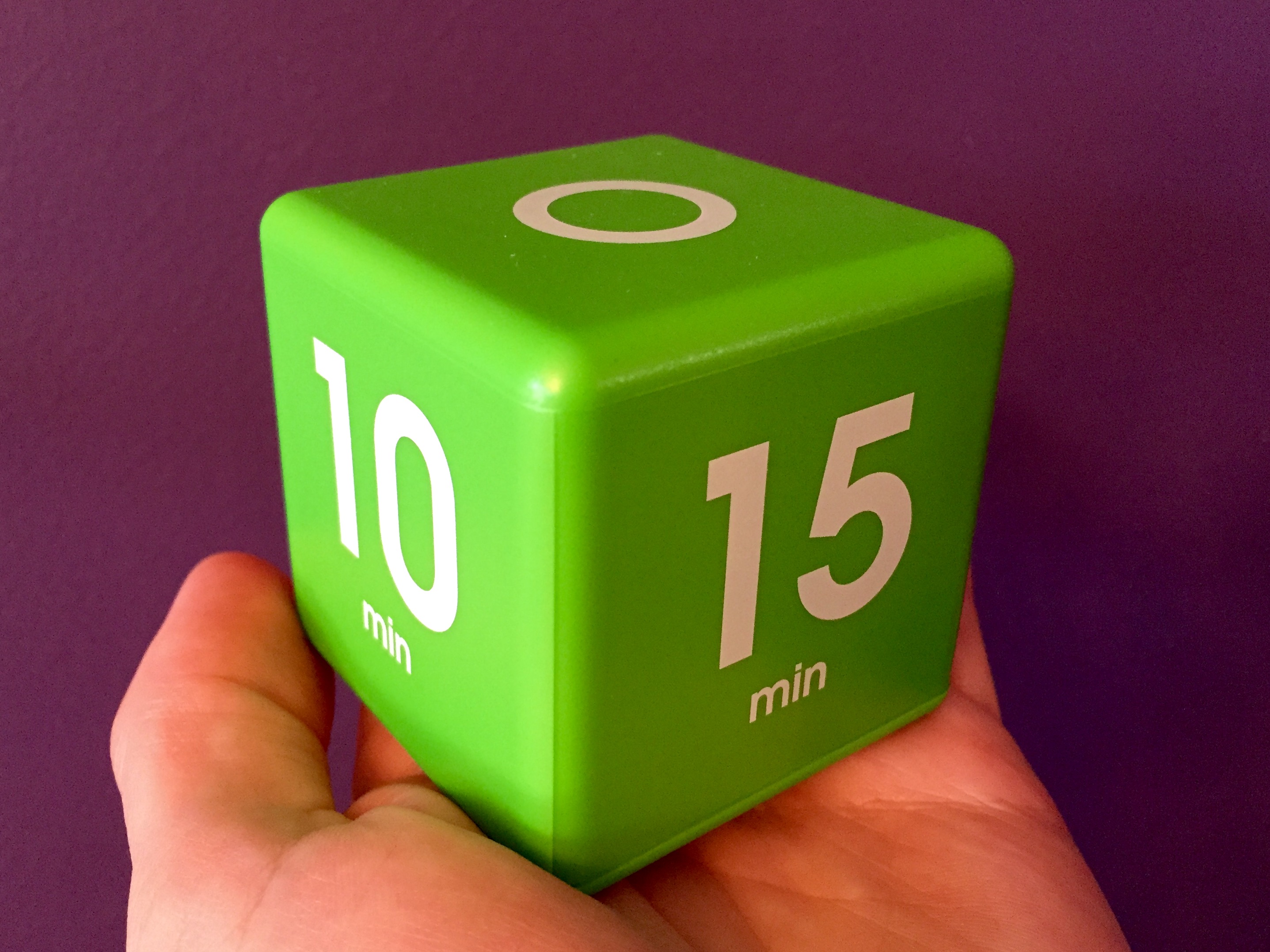
We just got a Datexx miracle cube timer to help the kids with things like toy sharing and limiting their screen time. We love it! I may have to pick up another one just for myself to use for exercising, instrument and juggling practice, gaming, or other activities. It would also be great for personal productivity, meditation, or time management strategies such as the pomodoro technique. You just turn it on, flip it so the desired number of minutes is on top, and do your thing until the alarm sounds. Flipping it over to “0” turns the alarm off.  Overall, it’s very easy to use for kids.Datexx 2
These are way better than your average kitchen timers, especially because there is no ticking sound to stress you out or break your concentration. If you do need to keep track of time, there is a small digital display on one side that counts down to zero. The miracle cube timer comes in a variety of different colors which relate to varying combinations of timed increments, going up to an hour. It is perfect for managing kids at home or in the classroom, or for anyone looking for a simple, fun, and easy way to time their activities.